

Reju Enlists Six Mills for Recycled Polyester Production
Reju has recruited six mills to produce recycled polyester, according to Ecotextile News. The report names no specific mills, capacities, or timelines for the arrangement.
Reju has recruited six mills to produce recycled polyester, according to Ecotextile News. The report names no specific mills, capacities, or timelines for the arrangement.
The US Government Accountability Office (GAO) has called for action to advance textile circularity in the United States, according to Ecotextile News. The report frames circularity as a policy priority for the US textile sector, with implications for material compliance and recycled feedstock sourcing across the supply chain.
Envalior is betting on circular PA6 and bio-based PPS, with its SECARA partnership targeting recycled caprolactam recovered from scrapped vehicles. The move comes as new EU recycled-content rules approach, making feedstock qualification and compliance documentation central to production planning.
Manufacturing & Process Note: Recycled caprolactam from end-of-life vehicles introduces feedstock variability that plant managers must qualify against virgin PA6 specs; incoming lot testing and supplier audit trails become critical as EU recycled-content thresholds tighten.
Arclin and General Recycled are advancing mechanical recycling of meta-aramids and para-aramids from protective apparel, with General Recycled blending 20, 33, or 50 percent recycled fiber into new yarns. Meta-aramids are more compatible with existing textile recycling systems, while para-aramids cause increased wear on processing equipment. Traceability and PFAS contamination remain key barriers, with an estimated 35 million pounds of PFAS-contaminated firefighting gear facing changeout in North America over the next five to seven years.
Manufacturing & Process Note: Recycling aramid protective apparel hinges on lot-level traceability and contamination screening, since PFAS-laden turnout gear and multilayer constructions complicate mechanical reclamation. Plant managers should factor disposal-cost offsets and recycled-content blend ratios into procurement, as recycled aramid economics depend on stable petrochemical pricing and verified input streams.
The EU Packaging and Packaging Waste Regulation (PPWR) became generally applicable on August 12, 2026, introducing harmonized EU-wide rules on recyclability, recycled content, EPR, PFAS, and labeling.
Manufacturing & Process Note: The PPWR's recycled-content mandates from 2030 will tighten recycled-polymer feedstock availability and require converters to secure verified supply chains; plants should begin qualifying alternative materials and documenting recycled content now to avoid line disruptions.
Ultraflex Systems released a buyer's guide detailing its EcoVantage PVC-free PET film and ReSource recycled-yarn textile lines, specifying certification and end-of-life claim requirements for print service providers.
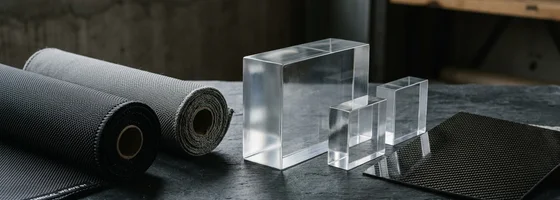
Röhm is positioning its PLEXIGLAS® proTerra portfolio, which incorporates mechanically recycled PMMA or sustainably certified raw materials, to help automotive customers meet the EU End-of-Life Vehicles Regulation confirmed at the end of July 2026.
Manufacturing & Process Note: The EU End-of-Life Vehicles Regulation sets binding recycled-plastic quotas of 15% by weight from 2032 and 25% from 2036, making mechanically recycled PMMA grades a procurement planning item for automotive tier suppliers. Plant managers should verify that proTerra grade specifications match virgin-material optical and mechanical tolerances before requalifying molded lamp covers and light guides.
Katherine Soucie has tested Cheekyarn's Loop8 recycled yarn as a structural component in upcycled textiles built from recycled wool-blend sock waste sourced from J Alex Swift. In her trials, Loop8 remained visible and structurally present through wet and dry felting, unlike wool yarns that merged into the sock material. The 8-ply yarn proved slightly too large for the needle eye of her Merrow Crochet Purl Edge machine, so she adapted with hand stitching.
Messe Frankfurt's Techtextil 2026, running 21–24 April, has launched the Nature Performance label grouping more than 110 exhibitors of natural and bio-based fibres and yarns. The fair also features around 90 exhibitors of recycled and recyclable fibres, including Teijin Group and Lenzing, alongside the Dutch Circular Textile Pavilion showcasing chemical fibre-to-fibre recycling. Around 120 companies carry the Texpertise Econogy sustainability certification label.

